

How much time and money does your business lose each year to misplaced tools, inefficient processes, or stolen equipment? For many organisations, the true cost is hidden in wasted staff hours spent searching for items that should be readily available. What if you could eliminate this problem entirely? What if you could give every single one of your valuable assets a digital voice, allowing them to tell you exactly where they are and how they’re being used in real time?
This isn’t science fiction; it’s the reality of the Internet of Things (IoT). IoT asset tracking is revolutionising how businesses manage their physical resources, moving them from reactive guesswork to proactive, data-driven control. In this article, we will explore the seven most transformative benefits of IoT asset tracking and show you how this technology can unlock new levels of efficiency and profitability for your organisation.
What is IoT Asset Tracking? A Plain English Explanation
Before we dive into the benefits, let’s quickly demystify the technology. The term “Internet of Things” can sound complex, but the concept behind asset tracking is refreshingly simple. Think of it as giving each of your assets its own mini-computer and a mobile phone.
It works using three core components:
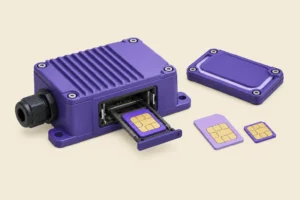
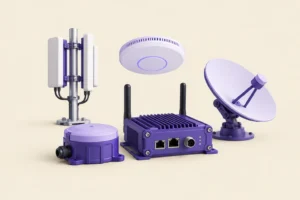
- The Sensor (The ‘Thing’): A small, durable tag or sensor is attached to your asset. This could be a vehicle, a high-value tool, a shipping container, or even a medical device. These sensors can track location (using GPS), temperature, movement, and more.
- The Connectivity (The ‘Internet’): The sensor uses a network—like cellular (4G/5G), Wi-Fi, or Bluetooth—to send its data to the cloud. This is the communication link that makes real-time asset tracking possible.
- The Platform (The Application): This is your command centre. It’s a software application, accessible on your computer or mobile device, that displays all the data from your sensors on an easy-to-understand dashboard. You can see your assets on a map, receive alerts, and run reports.
In essence, you are creating a digital twin of your physical assets, giving you complete visibility and control from anywhere in the world.

The 7 Key Benefits of Embracing IoT Asset Tracking
Now, let’s explore the powerful advantages this visibility brings.
1. Drastically Reduce Costs and Prevent Loss
The most immediate return on investment from IoT tracking is in cost savings. High-value assets are prime targets for theft, and simply misplacing equipment on a large construction site or in a sprawling warehouse can lead to costly delays and re-purchases.
With IoT, each asset’s location is tracked 24/7. If a piece of machinery leaves a designated area (a concept known as ‘geofencing’), you receive an instant alert on your phone. This allows you to notify security or the authorities immediately, drastically increasing the chances of recovery. Beyond theft, consider the “soft costs”: how many paid hours do your staff spend searching for shared equipment? IoT eliminates this entirely, freeing up your team to focus on productive tasks.
2. Boost Operational Efficiency and Productivity
Manual asset management is a drain on resources. Think of clipboards, spreadsheets, and manual stock-takes—they are slow, prone to human error, and provide a snapshot that is outdated the moment it’s completed.
IoT automates this entire process. Imagine your warehouse manager needing to locate a specific pallet. Instead of a manual search, they can pinpoint its exact location on a digital map in seconds. This automation extends to workflows. For instance, when a delivery vehicle arrives at its destination, the system can automatically log the arrival time and notify the next person in the chain. This seamless flow of information eliminates bottlenecks and streamlines your entire operation.
3. Enhance Security and Compliance
Geofencing is a game-changer for security. You can create virtual perimeters around your worksites, warehouses, or depots. If an asset crosses this boundary outside of authorised hours, an alert is triggered. This is not just for preventing theft, but also for safety and compliance. For instance, you can ensure that certain equipment never leaves a designated safe zone.
For businesses in regulated industries, IoT provides an indisputable audit trail. All asset movements, usage times, and environmental conditions (like temperature for cold chain logistics) are automatically recorded and stored securely. This data is invaluable for demonstrating compliance with national and international regulations and industry standards, simplifying audits and reducing administrative burdens.
4. Gain Valuable Insights with Data-Driven Decisions
One of the most powerful benefits of IoT asset tracking is the data it provides. Knowing where your assets are is just the beginning. The real magic happens when you start analysing how they are being used.
Your tracking platform can generate reports that reveal:
- Asset Utilisation: Are you getting the most out of your expensive equipment? The data might show that you have ten high-value tools, but five of them are sitting idle 90% of the time. This insight allows you to optimise your inventory and avoid unnecessary purchases.
- Workflow Bottlenecks: Are assets bunching up at a particular stage in your process? This data can help you identify and resolve inefficiencies you never knew you had.
- Operational Patterns: Understand the typical routes your vehicles take or the average time a piece of equipment is used per job.
This business intelligence empowers you to move from guesswork to strategic decisions that directly impact your bottom line.
(Recommendation: Insert an image here of a person looking at an asset tracking dashboard on a tablet, showing maps and graphs. Alt Tag: “Operations manager analysing asset utilisation reports on a tablet using IoT asset tracking software.”)
5. Improve Maintenance Schedules and Asset Lifespan
In manufacturing and logistics, unexpected equipment failure means costly downtime. The traditional approach is reactive (fixing things when they break) or based on a fixed schedule (which might lead to over- or under-servicing).
IoT enables predictive maintenance. By tracking actual usage hours, mileage, or engine performance, the system can automatically flag an asset for maintenance when it’s truly needed. This proactive approach prevents catastrophic failures, extends the lifespan of your valuable equipment, and ensures your assets are always in optimal working condition, enhancing safety and reliability.
For assets travelling across borders, check whether the proposed cellular connection supports the countries, technologies and time abroad involved. Use our global IoT SIM coverage and roaming checklist before selecting connectivity.
6. Optimise Your Supply Chain and Logistics
For any business involved in moving goods, from local delivery services to international freight, visibility is everything. A lack of real-time asset tracking in the supply chain leads to uncertainty, delays, and frustrated customers.
IoT provides end-to-end visibility. You can track a shipment from the moment it leaves your warehouse to the second it arrives at its destination. You can monitor its condition, ensuring that sensitive goods are kept at the right temperature or are not subjected to shocks. This transparency helps in optimising routes, predicting delivery times accurately, and quickly resolving any in-transit issues. For businesses navigating complex international logistics, this level of control is more valuable than ever.
7. Elevate Customer Satisfaction
Ultimately, all these internal benefits translate into a superior customer experience.
- Accurate ETAs: When a customer asks for an update, you can give them a precise, real-time location and estimated time of arrival, not a vague “it’s on the van”.
- Proof of Delivery: IoT systems can provide undeniable proof that a shipment arrived at the correct location and time.
- Reliability: By using IoT to ensure your equipment is well-maintained and your logistics are efficient, your service becomes more reliable and dependable.
In a competitive market, this level of service excellence builds trust and loyalty, turning one-time customers into long-term partners.
To turn an asset-tracking use case into an operational plan, use our IoT connectivity lifecycle checklist. It sets out owners, tests and evidence for the connection from pilot to retirement.
Your Next Move: From Information to Implementation
As we’ve seen, the benefits of IoT asset tracking are not just incremental improvements; they represent a fundamental shift in how you can manage and control your business. From slashing costs and preventing theft to boosting productivity and delighting customers, the power of real-time data gives you an unparalleled competitive edge. The question is no longer if you should adopt this technology, but how quickly you can get started.
Don’t let outdated manual processes hold your business back. Embrace the future of asset management and unlock the efficiency you need to thrive.
For a deeper dive into how to get started, read our A Practical Guide to Implementing an IoT Asset Tracking System or Contact Us today for a no-obligation consultation with one of our specialists.



Join The Conversation
If an asset goes somewhere with no mobile signal, does the tag just store everything until it's back in range?
Not necessarily — it depends on the tracker. The location fix itself comes from satellites, so a GPS tag can still know where it is without mobile signal, and many cellular models buffer readings and upload them once coverage returns. Cheaper units may simply drop the data, so check for store-and-forward or onboard memory in the spec.
Do assets moving between indoor sites and the road need a mix of GPS and Bluetooth tags, or can one tracker do both?
One tracker can do both if it combines GPS with BLE or Wi-Fi positioning, but the indoor side still needs gateways to hear it. GPS fades inside buildings and BLE won't help on the open road, so many fleets run a blend. The step-by-step implementation guide covers choosing between GPS, BLE and RFID for mixed sites.